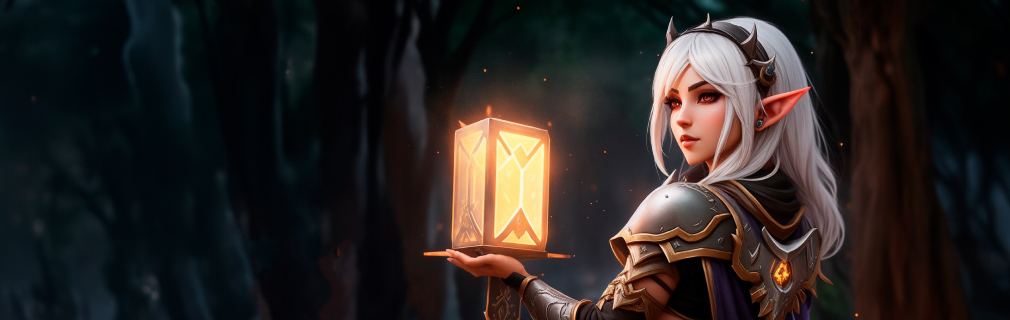
Fashion Is the True Endgame — Why Character Appearance Becomes the Main Goal in MMORPGs

Fashion Is the True Endgame — Why Character Appearance Becomes the Main Goal in MMORPGs
At the beginning of almost every MMORPG, players think about power. They want a higher level, better weapons, rare armor and access to difficult content. They study statistics, compare equipment and try to develop their characters as quickly as possible.
But eventually, the maximum level is reached, the main bosses are defeated, the required statistics are collected and familiar content has been completed dozens of times.
A new goal then appears: creating a character that other players recognize immediately.
Rare wings in MU Online, a unique armor set in Lineage 2, an unusual mount in World of Warcraft, a bright costume in AION or rare fashion equipment in Perfect World can become more valuable than a small increase in combat statistics.
This is where the popular idea comes from: fashion is the true endgame.
For MMOGTOP and MMOGTOP.GG, this topic is especially relevant because visual identity strongly influences life on private servers. Players do not only want to win. They also want to display their achievements and personal style to the community.
Why appearance eventually becomes more important than statistics
During early progression, every upgrade feels useful. A new sword helps defeat monsters faster, stronger armor improves survival and additional statistics unlock more difficult areas.
At the endgame, the situation changes.
The difference between two powerful items may be small, while a rare appearance is instantly noticeable. Other players do not need to inspect the character or open the rankings. They see someone standing in town and immediately understand that the character is unusual.
Appearance becomes a language of status.
It may represent:
- participation in an old event;
- victory in a tournament;
- completion of a difficult raid;
- ownership of a rare item;
- membership in a famous guild;
- support for the project;
- years of experience;
- the player’s personal style.
Character strength appears during combat. Appearance is visible all the time, even when the character is simply standing in town.
The main city as an in-game fashion stage
Cities in MMORPGs serve more purposes than simply being safe zones.
Players trade, search for groups, talk to friends, access storage and prepare for upcoming events. At the same time, the city becomes a place where characters display their appearance.
A player may intentionally position their character near a popular NPC or central square so others can see:
- new armor;
- rare weapons;
- wings;
- mounts;
- costumes;
- visual auras;
- guild emblems;
- unique titles.
Sometimes players spend more time selecting the perfect location and pose than participating in PvP.
This is not meaningless inactivity. In an MMO community, displaying achievements is part of social gameplay.
The character as a digital identity
In a single-player game, the main person who sees the character’s appearance is the player. In an MMORPG, that character exists in front of hundreds or thousands of other people.
It gradually becomes a digital representation of its owner.
Players choose:
- gender and race;
- hairstyle;
- face;
- class;
- armor colors;
- weapon type;
- costume;
- mount;
- pet;
- visual effects;
- nickname and title.
Every detail helps create a recognizable image.
One player may want to look like a dark knight. Another may create a bright angelic appearance. Someone else may intentionally use simple equipment to stand out among characters covered in enormous glowing effects.
Even an old low-level armor set can become part of a personal style when the game allows its appearance to be preserved.
Rarity can matter more than beauty
The most visually attractive costume is not always the most desirable.
In MMORPGs, the origin of an item matters greatly.
A beautiful costume available to everyone in the shop quickly becomes ordinary. A less impressive item may be extremely valuable if it was given only to participants of an old event.
Rarity can come from:
- a limited availability period;
- a difficult achievement;
- a very low drop chance;
- victory in a PvP tournament;
- a high seasonal ranking;
- an early server opening;
- a special community event;
- a unique guild reward;
- an item no longer available to new players.
The item then becomes part of the server’s history.
The owner does not wear it only because it looks good. They wear it because it represents a memory.
MU Online — wings as the ultimate visual symbol
In MU Online, appearance has always been important, and wings are among the most recognizable visual elements in the game.
Receiving the first wings changes how a character is perceived. The character no longer looks like a beginner. Higher wing tiers make the appearance larger, brighter and more detailed through additional light and energy effects.
Players compare:
- shape;
- size;
- color;
- effects;
- level;
- options;
- rarity;
- compatibility with the armor set.
For many users, obtaining new wings feels more exciting than receiving a small statistical upgrade.
This is especially noticeable on Season 3 and Season 6 private servers, where players have known the visual style of the equipment for many years.
When a character appears in Lorencia wearing rare wings and a carefully selected set, other players notice them even without checking the rankings.
Why oversized wings can damage the design
Private servers often add custom wings to make their projects look unique.
But bigger does not always mean better.
Oversized wings can:
- cover nearby players;
- block NPCs;
- overload the screen;
- conflict with armor models;
- reduce performance;
- look disconnected from the original art style;
- make large-scale PvP harder to read.
A strong custom design should respect character proportions and the overall style of the game.
Players want noticeable wings, but they do not need an object that covers half the screen.
MU Online server owners should test custom wings not only on one character, but also in cities, parties, Castle Siege and mass events.
Lineage 2 — armor as a symbol of an era
In Lineage 2, equipment appearance can immediately reveal a character’s development level and sometimes even the chronicle used by the server.
Players recognize classic armor grades and popular sets easily. A character’s appearance may remind them of a certain era of the game more strongly than the interface or server settings.
One set represents early progression. Another is connected to the first serious PvP battles. A third may be associated with Olympiad, epic bosses or famous clans.
On Interlude and High Five servers, visual recognition of equipment is especially important. A player can often estimate the strength of an opponent from a distance.
This creates a useful connection between appearance and real power.
When a custom costume completely hides the original armor, that information disappears. Server owners therefore need to choose between complete visual freedom and maintaining clear PvP readability.
Weapons as a personal signature
In MMORPGs, weapons often become the central element of a character’s appearance.
A rare sword, staff, bow or pair of blades may be more noticeable than the rest of the equipment. Players recognize their shapes and effects and connect them with particular classes, bosses or events.
Weapons become especially valuable when they:
- are difficult to obtain;
- require a long quest chain;
- are created through crafting;
- drop from a major boss;
- are awarded to tournament winners;
- have a unique animation;
- visually change after upgrading;
- are no longer obtainable.
Such a weapon develops its own history.
A player may keep an old weapon after obtaining a stronger one because it remains connected to important victories.
World of Warcraft and transmogrification culture
In World of Warcraft, the ability to change equipment appearance transformed old content into a source of new goals.
A player may return to an outdated raid not for stronger statistics, but for one specific armor piece. Old dungeons, reputations and expansions become relevant again.
This creates a separate gameplay loop:
- Create an appearance concept.
- Find suitable items.
- Identify where they drop.
- Complete old content.
- Assemble the full set.
- Choose a matching weapon and mount.
- Show the result to other players.
Visual customization extends the life of a large amount of content.
An item that is useless for character progression can remain valuable because of its design.
AION — costumes, wings and distinctive silhouettes
In AION, appearance is especially noticeable because of detailed character creation, costumes and wings.
Players create very different styles, ranging from serious armored heroes to bright fashion-focused characters who barely resemble traditional warriors.
Wings are not purely decorative because flight is an important part of the world. Their design therefore becomes closely connected to the identity of the character.
For an AION private server, visual content can become a strong retention system through:
- seasonal costumes;
- rare wings;
- dye systems;
- event skins;
- weapon appearances;
- faction-themed rewards;
- guild cosmetics.
The important thing is to avoid turning the screen into a chaotic collection of effects that damages the atmosphere of Atreia.
Perfect World — an MMORPG where fashion became its own content
In Perfect World, fashion has always played a major role.
Players can change clothing independently from combat equipment, combine different items, dye them and create personal styles. For many users, purchasing or earning a new costume becomes a complete gameplay objective.
Fashion also supports the social side of the game:
- players gather in cities;
- organize in-game weddings;
- take screenshots;
- host contests;
- create matching couple outfits;
- design shared guild styles;
- use fashion for roleplay.
This system demonstrates that appearance can become an independent layer of content without being directly connected to PvP or PvE strength.
Mounts and pets as extensions of the character
A character’s appearance consists of more than armor.
Mounts and pets can completely change how a hero is perceived. A giant dragon creates one image, a mechanical creature creates another, while a small humorous pet can add contrast to a serious armored character.
Rare mounts often become symbols of achievement.
Players may earn them through:
- difficult raids;
- seasonal rankings;
- rare drops;
- long reputation grinds;
- PvP achievements;
- item collections;
- server anniversaries;
- community events.
When a mount is available only to the strongest players of one season, it becomes a mobile trophy.
Other users do not need to inspect the owner’s profile. The achievement is visible directly in the world.
Titles as the textual part of character style
Sometimes a few words beside a nickname are more valuable than glowing armor.
A title may identify:
- a Castle Siege winner;
- the top PvP player;
- a beta-test participant;
- a server veteran;
- a tournament champion;
- the first maximum-level character;
- a famous crafter;
- a community contributor;
- the owner of a rare achievement.
A good title is short and recognizable.
When a server adds dozens of long and brightly colored titles, the interface becomes overloaded. One rare title, however, can make a character memorable for years.
Permanent rewards from events that will never return can be especially valuable.
Appearance and the server economy
Cosmetic items can create a complete in-game market.
Players buy, sell and exchange:
- costumes;
- dyes;
- skins;
- mounts;
- pets;
- visual effects;
- appearance tokens;
- old event items;
- limited collections.
When the system is designed properly, cosmetics support the economy without damaging combat balance.
A cosmetic item provides no direct advantage in PvP, but it may still remain valuable because of rarity and demand.
Limited cosmetics can also become objects of speculation. Wealthy players purchase multiple copies, wait until the event ends and later resell them for much higher prices.
This can create useful market activity as long as prices do not become completely inaccessible to ordinary players.
Cosmetics as a fairer monetization model
For private server owners, cosmetics are one of the clearest forms of monetization.
Players receive a visible reward, while the project receives financial support. Combat balance does not need to change.
A shop can offer:
- costumes;
- weapon skins;
- pets;
- mounts;
- name effects;
- visual auras;
- appearance changes;
- character customization;
- decorative wings.
However, the word “cosmetic” does not automatically mean the system is fair.
When a paid costume provides hidden statistics, increases movement speed, reduces the visible size of the character or makes targeting harder in PvP, it affects gameplay.
Visual items should remain genuinely visual.
Why identical premium costumes destroy individuality
When one popular costume becomes available to everyone, cities quickly fill with identical characters.
Instead of individuality, the server gets a uniform.
This is especially noticeable during a fresh start when a premium set looks much better than ordinary progression equipment. Players who are willing to pay purchase it immediately, while everyone else appears visually incomplete.
Servers can reduce this problem by:
- offering several different styles;
- adding dye systems;
- separating costumes into individual pieces;
- providing in-game methods of obtaining cosmetics;
- limiting excessively bright effects;
- organizing character appearance contests;
- releasing smaller themed collections.
A good fashion system gives players creative tools rather than forcing one universally superior appearance.
Custom sets on private servers
Custom armor and weapons help a server stand out from other projects using the same game version.
However, players notice poorly prepared content immediately.
Common problems include:
- low-resolution textures;
- incorrect proportions;
- armor parts clipping through the character;
- weapons positioned incorrectly in the hand;
- missing animations;
- inventory icons that do not match the item;
- effects that are too bright;
- designs that do not fit the game;
- major quality differences between male and female versions.
Custom content should be tested on different classes, animations, maps and lighting conditions.
One attractive promotional screenshot does not guarantee that the set works properly during real gameplay.
Fashion contests
A fashion contest is a simple way to create community activity without changing balance.
Possible themes include:
- dark knight;
- royal guardian;
- forest spirit;
- winter celebration;
- classic armor;
- guild colors;
- funniest character;
- best couple;
- best low-level appearance.
Players publish screenshots, and the administration or community selects winners.
Rewards can remain cosmetic:
- a unique title;
- a special costume;
- a Discord role;
- publication on the website;
- a small amount of premium currency;
- a personalized banner.
This type of event is accessible even to players who do not participate in serious PvP or combat rankings.
Screenshots as part of MMO culture
Character appearance is closely connected to screenshots.
Players save images of:
- receiving a rare item;
- a first victory;
- an old guild roster;
- an in-game wedding;
- their character before the server closes;
- a favorite costume;
- a beautiful location;
- a large siege;
- a community meeting.
Years later, item statistics lose their importance, but the image remains.
Sometimes one old screenshot creates more emotion than the ability to launch the game again.
Visual identity therefore becomes part of the memory of the server.
When too many effects damage PvP
During large-scale battles, visual beauty can conflict with usability.
Hundreds of characters may use:
- glowing wings;
- auras;
- animated weapons;
- pets;
- mounts;
- skill effects;
- titles;
- guild emblems.
The screen becomes overloaded, and performance decreases.
Players struggle to identify:
- enemy classes;
- attack direction;
- dangerous abilities;
- healer positions;
- area-effect boundaries;
- selected targets.
A good server may offer settings for:
- hiding other players’ costumes;
- reducing visual effects;
- hiding pets;
- simplified models during sieges;
- limiting titles;
- activating a performance mode.
This allows visual content to remain active in cities without damaging serious PvP.
Why old simple sets can be more popular than new ones
Not every player wants the maximum amount of light, particles and detail.
Older armor sets can look better because of:
- recognizable silhouettes;
- clean design;
- connection to the game’s history;
- realistic proportions;
- fewer unnecessary effects;
- rarity on modern servers.
This creates demand for classic appearances.
A character wearing a simple old set may stand out more than someone covered in huge wings and multiple auras.
Style depends on the complete image, not the number of effects.
Guild appearance
Fashion works at the guild level as well.
A guild may use:
- a shared color scheme;
- matching costumes;
- a clan emblem;
- themed titles;
- similar mounts;
- coordinated weapon skins.
During Castle Siege or Territory War, such a group looks organized before the battle even begins.
A shared appearance strengthens group identity and helps create a recognizable guild brand.
Later, screenshots of the roster become part of the server’s history.
Why players return for collections
Collecting creates a long-term objective without constantly increasing character power.
Players may collect:
- every costume;
- different wing tiers;
- mounts;
- pets;
- titles;
- weapon skins;
- seasonal items;
- anniversary rewards.
Every new item expands the collection without making previous achievements useless.
This is different from combat equipment. A new armor tier often replaces the old one completely. A cosmetic item can remain valuable because of its design and history.
Collections can keep players active even after the main progression is complete.
What private server owners should consider
Before adding cosmetic content, administrators should define its purpose.
Important questions include:
- Can the item be traded?
- Is it available only for a limited time?
- Can it be earned through gameplay?
- Does it affect statistics?
- Can its color be changed?
- Does it preserve class readability?
- Do the effects damage performance?
- Does the design fit the game version?
- Will the item remain available after the event?
- How can the server avoid visual overload?
Cosmetics should not be added only to fill the webshop.
Every item should support the overall visual direction of the project.
How MMOGTOP.GG can present the visual side of a server
On MMOGTOP.GG, project descriptions can cover more than rates, season and opening date. They can also explain the visual systems available on the server.
Owners can present:
- custom sets;
- wings;
- costumes;
- mounts;
- pets;
- guild rewards;
- tournament skins;
- seasonal collections;
- transmogrification systems;
- available effect settings.
High-quality screenshots help players understand the project’s style before downloading the client.
For MMOGTOP, this also creates new editorial opportunities: the best armor sets, the history of wings, fashion contests and visual customization guides for popular MMORPGs.
Why fashion becomes the true endgame
The final boss will eventually be defeated. Maximum level will be reached. Many players will eventually obtain the strongest weapons.
Creating the perfect appearance has no final solution.
New combinations, collections, rare rewards and events continue to appear. Players change their style based on the season, guild or personal mood.
Appearance does not replace gameplay, but it gives a character individuality after the main progression is complete.
That is why the famous MMO joke increasingly feels like a serious statement:
Fashion is the true endgame.
Final thoughts
Character appearance in MMORPGs is more than decoration.
It represents achievements, history, status, community membership and personal style. Wings, costumes, mounts, pets, weapon skins and titles become digital memories that may eventually matter more than combat statistics.
Lineage 2, MU Online, World of Warcraft, AION, Perfect World and other MMORPGs prove that players do not only want to be powerful. They want to be recognizable.
Private servers can use visual customization for community events, collections and fair monetization while preserving gameplay balance.
As long as players search for MMORPG fashion, MMO cosmetics, character customization, MU Online wings, Lineage 2 armor sets, WoW transmog, AION costumes, Perfect World fashion, MMOGTOP and MMOGTOP.GG, this topic will remain valuable for MMO audiences.